

Will Freight Forwarders Be Phased Out by Cloud Computing?
Deep in the night at the logistics park, Mr. Zhang stared at the constantly numbers on the computer screen, his brows tightly furrowed. His freight forwarding company had just received an international order, but the traditional manual dispatching method left the entire team in a flurry. Meanwhile, in the adjacent office, Ms. Li was automatically matching global cargo ship berths through the cloud system, and the prompt "Optimal solution generated" that popped up on the system was particularly in the darkness - this might just be the watershed moment for the industry in the next decade.
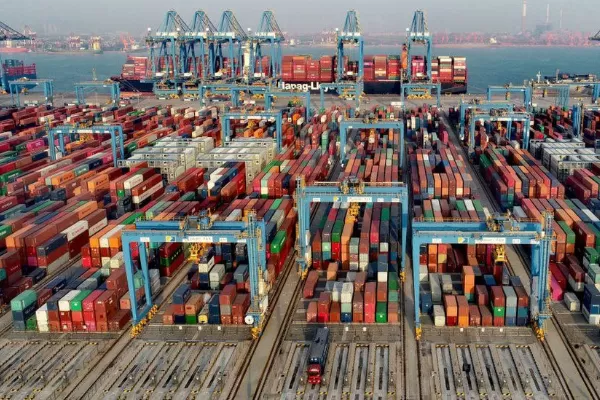
The traditional freight forwarding industry has long faced three major pain points: information silos, lengthy processes, and delayed responses. During a certain peak shipping season, the dispatcher at Zhongshitong had to handle the quotation sheets of 17 shipping companies simultaneously, while the introduction of the cloud system compressed this decision-making process from an average of 4.2 hours to 9 minutes. Cloud technology not only brings a speed increase but also restructures the industry value chain:
- Electronic waybills enable full-process visual tracking of customs declaration/clearance
- The AI cargo volume prediction model reduces the empty load rate by 23%
- Blockchain evidence storage shortens the dispute handling cycle by 60%
Scenario 1: Dynamic Berth Auction
During a sudden shortage of berths on the European route, Ms. Li's company completed the berth procurement that usually takes 2 days of negotiation within 47 minutes through the cloud-based bidding platform, and the final cost was 15% lower than the budget.
Scenario 2: Abnormal Event Warning
When there was a sign of congestion in the Panama Canal, Mr. Zhang's mobile phone received 12 alternative route plans pushed by the system at 3 am, 11 hours earlier than the industry average response time.
Scenario 3: Carbon Footprint Management
Through the transportation data integrated by the cloud platform, Zhongshitong automatically generates low-carbon route reports for customers, which has become a key decision-making factor for a Fortune 500 company to choose agency services.
Despite the broad prospects, a certain survey shows that only 34% of small and medium-sized agents have truly made full use of cloud-based tools. Common misunderstandings include:
- Simply equating "going to the cloud" with using spreadsheets
- Ignoring the integration of API interfaces with existing ERP systems
- The awareness of data security remaining in the era of padlocked drawers
When Ms. Li's intelligent dispatching system automatically avoided the typhoon path for the 100th time, Mr. Zhang had just hung up the 8th call to explain the delay. This silent technological iteration is speaking with data: the customer renewal rate of agent enterprises using cloud-based tools is 41% higher than the industry average.
Perhaps when you wake up tomorrow, you will receive the weekly global capacity fluctuation report pushed by the system, or you will continue to manually update the shipping schedule in an Excel spreadsheet. This choice will determine which side of the industry transformation you stand on.
- Further Reading
- Is the Ocean Freight Forwarding System Killing Traditional Freight Forwarders?
- What do you know about the treatment of Huizhou export freight forwarders?
- Reveal the Profiteering Truth of Jinhua Freight Forwarders
- Surprise! The Hidden Rules of Freight Forwarders in Thailand That 90% of Enterprises Don't Know
- Do you know the business scope of freight forwarders?
- Revealing the Black - box Operations of Freight Forwarders
If you require China procurement agency or import-export agency services, please get in touch with us through the following channels. Our professional consultants will reach out to you promptly for personalized support.
Friendly Reminder


Latest Comments (0) 0
Leave A Comment